rustickln.bd@gmail.com
Complete verbatim textual archives of RUSTIC Annual Report 2024–2025, the WaterAid 60-Page Technical Monograph on Rainwater Harvesting in Apparel Industry, and the Organizational Profile & Constitution.
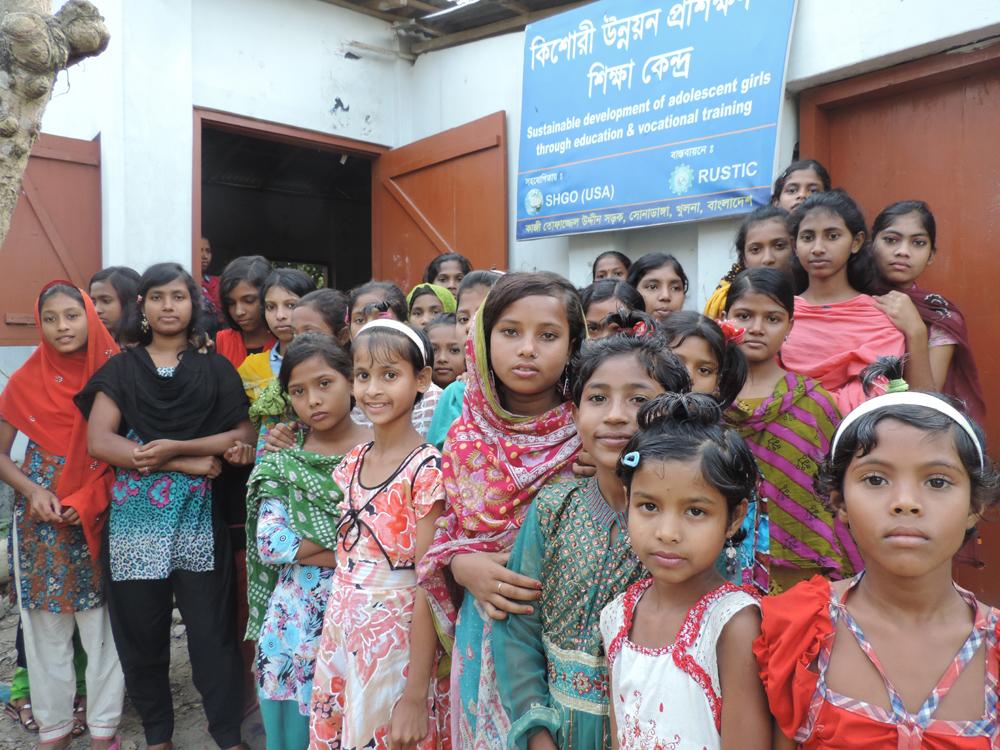
Publisher: RUSTIC (Rural Unfortunates Safety Talisman Illumination Cottage)
Head Office: 6/1 Hazi Tomij Uddin Sarak, Banorgati, Sonadanga, Khulna-9100, Bangladesh.
Dhaka Liaison Office: 23, Sahid Monsur Ali Sharani, 2nd Floor, Ramna, Dhaka, Bangladesh. (Cell: +88-01712-076267 | Email: rustickln.bd@gmail.com | Web: www.rusticbd.org)
Bangladesh is a developing nation in Southeast Asia and is home to over 166.5 million people—of whom more than 18.3% live below the poverty line. Among the most vulnerable are women and children, especially in remote regions like Khulna and Bagerhat, in the disaster-prone southwestern coastal belt. This area has faced repeated devastation from at least five major natural disasters over the past few years—including cyclones Sidr, Aila, Amphan, and Reshmi—exacerbating an already precarious socio-economic landscape. Its geographical distance from the capital, Dhaka, coupled with fragile infrastructure and unreliable communication networks, further isolates the region from national growth and support.
Natural calamities and economic neglect have created a cycle of hardship for the people of Khulna. Despite having significant potential—Khulna hosts the country’s second-largest seaport—unchecked deindustrialization has led to the closure or downsizing of at least 230 industries over the past two decades. In an attempt to combat tidal surges and boost agricultural productivity, the government initiated the Coastal Embankment Project (CEP) in the 1960s. However, this intervention had unintended ecological consequences: chronic water-logging, drainage congestion, and saline water introduced by indiscriminate shrimp farming, rendering agrarian soils barren.
Since 1988, local social activists led by Moral Noor Mohammad mobilized to create a legally recognized voluntary social development agency. RUSTIC was formally founded in 1989 and has grown into a leading institution focusing on waste-to-resource models, vocational education, gender equity, and climate-resilient community development.
RUSTIC operates under the supreme oversight of a 31-member General Body which elects a 7-member Executive Committee (EC) every two years:
| SL | Name | Position | Role & Responsibilities |
|---|---|---|---|
| 1 | Md. Monowar Hossain (Moinul) | President | Visionary leadership, strategic agenda, official representation, stakeholder relationships. |
| 2 | Dr. Md. Hasan Ali | Vice President | Assisting the President, committee oversight, organizational continuity, institutional positivity. |
| 3 | Moral Noor Mohammad | General Secretary & ED | Principal Executive Officer, overall project execution, budget management, financial strategy. |
| 4 | Favi Nahian Madhurjo | Joint Secretary | Day-to-day organizational coordination, communication, record keeping, departmental alignment. |
| 5 | Md. Saidur Rahman | Treasurer | Management of financial resources, financial planning, record stewardship, fundraising oversight. |
| 6 | Md. Monirul Haque Monir | Executive Member | Policy formulation, participatory decision-making, field initiative review. |
| 7 | Johora Akhter | Executive Member | Active participation in organizational decision-making, gender equity, community support. |
Between 2008 and 2025, RUSTIC effectively expanded its service to 89 communities and 106 villages across 11 Upazilas in Khulna, Bagerhat, and Satkhira districts:
| District | Upazila / Thana | No. of Unions | Villages / Wards | Male Members | Female Members | Total Members |
|---|---|---|---|---|---|---|
| Khulna | Koyra | 2 | 12 | 48 | 70 | 118 |
| Khulna | Dumuria | 2 | 12 | 29 | 101 | 130 |
| Khulna | Batiaghata | 2 | 5 | 55 | 37 | 92 |
| Khulna | Dacope | 2 | 8 | 30 | 87 | 117 |
| Khulna | Sonadanga (KCC Wards 16, 17, 18) | 3 | 3 | 35 | 67 | 102 |
| Bagerhat | Bagerhat Sadar | 4 | 6 | 30 | 44 | 74 |
| Bagerhat | Chitalmari | 2 | 9 | 32 | 71 | 103 |
| Bagerhat | Mollahat | 2 | 6 | 20 | 50 | 70 |
| Bagerhat | Mongla | 1 | 5 | 75 | 585 | 660 |
| Bagerhat | Kachua | 4 | 16 | 35 | 75 | 110 |
| Bagerhat | Fakirhat | 4 | 24 | 70 | 130 | 200 |
| Total 11 Upazilas | 26 Unions | 106 Villages | 459 Male | 1,317 Female | 1,776 Total | |
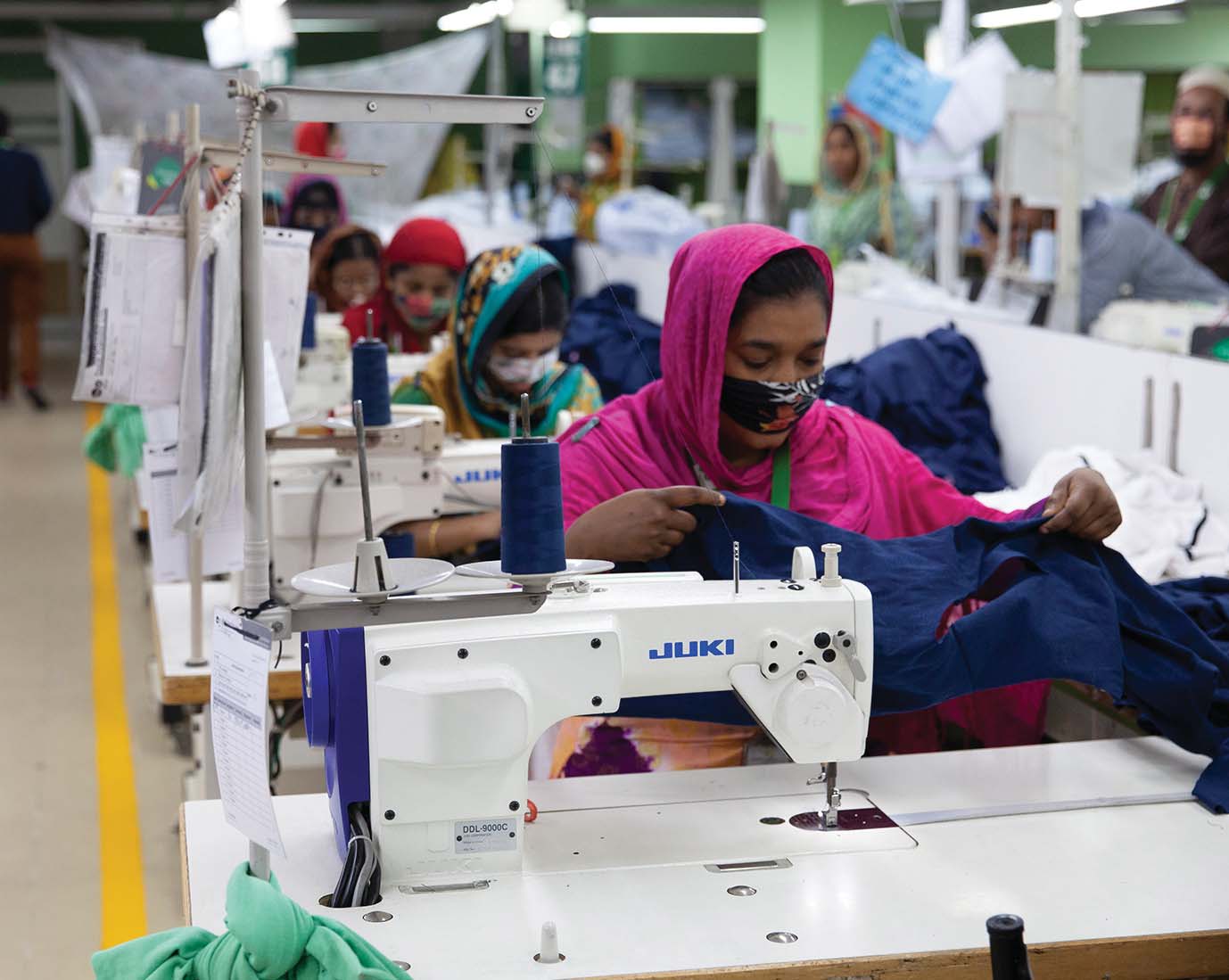
Technical Research Partners: WaterAid Bangladesh & Engineering Resources International (ERI) Ltd.
Research Scope: Multi-stakeholder assessment covering 7 RMG factories with RWHS, 16 factories without RWHS, regulatory bodies (DoE, RAiN Forum, BGMEA, BKMEA), and development financiers.
The rapid growth of the textile and RMG sectors in Bangladesh has placed extreme pressure on groundwater reserves. In major industrial clusters like Gazipur, Savar, Narayanganj, and Chittagong, the groundwater table is declining at an alarming rate of 2.0 to 3.0 meters per year. Heavy abstraction for industrial washing, dyeing, and domestic factory operations threatens ecological collapse and water shortages for surrounding communities.
This technical study establishes the technological feasibility, sizing parameters, water balance modeling, and financial return on investment (ROI) of Rooftop Rainwater Harvesting Systems (RWHS) for small, medium, and large apparel factories in Bangladesh.
| Barrier Domain | Major Contributing Factors | Actionable Remedies |
|---|---|---|
| 1. Factory Awareness & Technical Knowledge | Water viewed as "free" resource; long perceived payback period; existing structures not planned for RWHS. | Disseminate excel-based estimation tool; demonstrate lifecycle water savings; mandate RWHS provisions in all new factory designs. |
| 2. Policy & Regulatory Enforcement | Absence of strict volumetric water extraction tariffs outside EPZs; weak enforcement of Bangladesh National Building Code (BNBC 2020). | Implement volumetric groundwater extraction fees; enforce BNBC 2020 mandatory rainwater harvesting clauses for industrial plots. |
| 3. Financing & Capital Cost | High upfront CapEx for large storage cisterns; lack of familiarity with green refinancing schemes (SREUP, PaCT). | Link RMG owners with low-interest concessionary green lines (Bangladesh Bank Green Transformation Fund, SREUP). |
| 4. Institutional & Engineering Capacity | Shortage of certified hydraulic engineers and standardized O&M protocols for industrial filtration beds. | Accredit specialized engineering firms like ERI Ltd; develop standard O&M manuals for rapid sand and dual-media filters. |
| 5. International Brands & Buyer Incentives | Buyer scorecards prioritize chemical and energy compliance over water circularity; lack of price premiums for water-positive factories. | Encourage global fashion brands (H&M, Inditex, Marks & Spencer) to co-fund RWHS and grant preferred supplier status. |

Chief Executive: Moral Noor Mohammad (Ashoka Fellow, HSBC Climate Hero, WINROCK Nona Fisher Award Winner)
Total Funds Mobilized: BDT 28,00,00,000.00 (280 Million BDT) across 3 decades of high-impact humanitarian interventions.
In 1998, under the Integrated Food for Development (IFFD) project financed by USAID, coordinated by the Government of Bangladesh, and managed by CARE-Bangladesh, RUSTIC implemented an afforestation initiative in Sharankhola and Mongla Upazilas of Bagerhat district.
A total of 16,500 tree saplings (Mehagony, Raintree, Chambal, and Pahari Neem) were planted along 16.5 km of rural roadsides. Over 60% of the trees survived major super-cyclones Sidr (2007) and Aila (2009). The current standing valuation of these surviving trees exceeds BDT 300 Million (30 Crore Taka), providing ecological protection and carbon sequestration for the coastal belt.
In collaboration with Seven Hills Global Outreach (SHGO) and the Winrock International Farmer-to-Farmer (F2F) Program (led by Dr. Gary Lee Heusel), RUSTIC established an intensive training curriculum for 32 youth leaders.
The curriculum integrated three pillars: Youth Development, Servant Leadership, and Agricultural Entrepreneurship (Product, Place, Price, Promotion, Passion). Today, the RUSTIC Youth Group comprises 2 Master Trainers, 3 Community Leaders, and 27 agricultural entrepreneurs driving cooperative marketing for rural produce.

Secretariat: House # 09, Govt. Girls School Road, Amlapara, Bagerhat - 9300, Bangladesh.
Executive Leadership: Md. Asaduzzaman Sheikh (Executive Director). Operational across 13 Upazilas in Bagerhat and Magura districts covering Microfinance (MEDP), coastal WASH, child rights, and Sundarbans disaster resilience.
Recipient Authority: Consulate General of the Federal Republic of Germany (Economic Cooperation & Development). Complete 3-page itemized proposal blueprint covering 25 Community Rainwater Harvesting units, 15 school sanitation complexes, EU GDPR consent declarations, and itemized financing plan.
Official Document Archive: Complete 35-page statutory submission containing exhaustive historical origin, constitutional bylaws, 7 core programmatic pillars, 106-village operational cluster table, partner matrix, governance committee roster, full organizational organogram, and high-resolution official scanned certificates from the NGO Affairs Bureau (Prime Minister's Office) and Department of Social Welfare.
Complete statutory reference guide for technical abbreviations, governmental bodies, and developmental acronyms used throughout RUSTIC's project documentation.
| Acronym | Full Expanded Definition | Acronym | Full Expanded Definition |
|---|---|---|---|
| ADAB | Association of Development Agencies in Bangladesh | AM | Area Manager |
| ASIRP | Agricultural Services and Innovation Reform Project | BADS | Bangladesh Aquaculture Development Society |
| BCCSAP | Bangladesh Climate Change Strategy and Action Plan-2009 | BDT | Bangladeshi Taka (National Currency) |
| BEMP | Bangladesh Environmental Management Project | BRAC | Bangladesh Rural Advancement Committee |
| C&E | Climate Change & Environment | CBMSWMP | Community Based Municipal Solid Waste Management Project |
| CBO | Community Based Organization | CDF | Credit and Development Forum |
| CDL | Community Development Library | CEDAB | Climate Change Effects Defender's Association of Bangladesh |
| CEP | Coastal Embankment Project | CIDA | Canadian International Development Agency |
| DAE | Department of Agriculture Extension | E&HRD | Education and Human Resource Development |
| EC | Executive Committee | ED | Executive Director |
| F&A | Finance & Administration | GC | General Committee / General Body |
| GoB | Government of Bangladesh | HCP | Hard Core Poor |
| IGA | Income Generating Activities | GIZ | German Technical Cooperation (Deutsche Gesellschaft für Internationale Zusammenarbeit) |
| KCC | Khulna City Corporation | LGI | Local Government Institution |
| NFPE | Non-Formal Primary Education | RLF | Revolving Loan Fund |
| RUSTIC | Rural Unfortunates Safety Talisman Illumination Cottage | SAF | Sustainable Agricultural Forum |
| SEMP | Sustainable Environment Management Programme | SHGO | Seven Hills Global Outreach, USA |
| UNDP | United Nations Development Programme | UPPR | Urban Partnerships for Poverty Reduction |